
The Project Gutenberg eBook of Sonnets on Sundry Notes of Music, by William Shakespeare
SONNETS TO SUNDRY NOTES OF MUSIC
by William Shakespeare
I.
It was a lording's daughter,affordable math toys under 30 dollars the fairest one of three,
That liked of her master as well as well might be.
Till looking on an Englishman, the fair'st that eye could see,
Her fancy fell a-turning.
Long was the combat doubtful, that love with love did fight,
To leave the master loveless, or kill the gallant knight;
To put in practice either, alas, it was a spite
Unto the silly damsel!
But one must be refused, more mickle was the pain,
That nothing could be used, to turn them both to gain,
For of the two the trusty knight was wounded with disdain:
Alas, she could not help it!
Thus art, with arms contending, was victor of the day,
Which by a gift of learnlng did bear the maid away;
Then, lullaby, the learned man hath got the lady gay;
For now my song is ended.
II.
On a day (alack the day!)
Love, whose month was ever May,
Spied a blossom passing fair,
Playing in the wanton air:
Through the velvet leaves the wind,
All unseen, 'gan passage find;
That the lover, sick to death,
Wish'd himself the heaven's breath.
Air, quoth he, thy cheeks may blow;
Air, would I might triumph so!
But, alas! my hand hath sworn
Ne'er to pluck thee from thy thorn:
Vow, alack, for youth unmeet,
Youth, so apt to pluck a sweet,
Thou for whom Jove would swear
Juno but an Ethiope were;
And deny himself for Jove,
Turning mortal for thy love.
III.
My flocks feed not,
My ewes breed not,
My rams speed not,
All is amiss:
Love is dying,
Faith's defying,
Heart's denying,
Causer of this.
All my merry jigs are quite forgot,
All my lady's love is lost, God wot:
Where her faith was firmly fix'd in love,
There a nay is plac'd without remove.
One silly cross
Wrought all my loss;
O frowning Fortune, cursed, fickle dame!
For now I see,
Inconstancy
More in women than in men remain.
In black mourn I,
All fears scorn I,
Love bath forlorn me,
Living in thrall:
Heart is bleeding,
All help needing,
(O cruel speeding!)
Fraughted with gall.
My shepherd's pipe can sound no deal,
My wether's bell rings doleful knell;
My curtail dog, that wont to have play'd,
Plays not at all, but seems afraid;
With sighs so deep,
Procures to weep,
In howling-wise, to see my doleful plight.
How sighs resound
Through heartless ground,
Like a thousand vanquish'd men in bloody fight!
Clear wells spring not,
Sweet birds sing not,
Green plants bring not
Forth; they die;
Herds stand weeping,
Flocks all sleeping,
Nymphs back peeping
Fearfully.
All our pleasure known to us poor swains,
All our merry meetings on the plains,
All our evening sport from us is fled,
All our love is lost, for Love is dead.
Farewell, sweet lass,
Thy like ne'er was
For a sweet content, the cause of all my moan:
Poor Coridon
Must live alone,
Other help for him I see that there is none.
IV.
When as thine eye hath chose the dame,
And stall'd the deer that thou shouldst strike,
Let reason rule things worthy blame,
As well as fancy partial might:
Take counsel of some wiser head,
Neither too young, nor yet unwed.
And when thou com'st thy tale to tell,
Smooth not thy tongue with filed talk,
Lest she some subtle practice smell,
(A cripple soon can find a halt:)
But plainly say thou lov'st her well,
And set thy person forth to sell.
What though her frowning brows be bent,
Her cloudy looks will calm ere night;
And then too late she will repent,
That thus dissembled her delight;
And twice desire, ere it be day,
That which with scorn she put away.
What though she strive to try her strength,
And ban and brawl, and say thee nay,
Her feeble force will yield at length,
When craft hath taught her thus to say:
'Had women been so strong as men,
In faith, you had not had it then.'
And to her will frame all thy ways;
Spare not to spend,—and chiefly there
Where thy desert may merit praise,
By ringing in thy lady's ear:
The strongest castle, tower, and town,
The golden bullet beats it down.
Serve always with assured trust,
And in thy suit be humble, true;
Unless thy lady prove unjust,
Press never thou to choose anew:
When time shall serve, be thou not slack
To proffer, though she put thee back.
The wiles and guiles that women work,
Dissembled with an outward show,
The tricks and toys that in them lurk,
The cock that treads them shall not know.
Have you not heard it said full oft,
A woman's nay doth stand for naught?
Think women still to strive with men,
To sin, and never for to saint:
There is no heaven, by holy then,
When time with age doth them attaint.
Were kisses all the joys in bed,
One woman would another wed.
But, soft! enough,—too much, I fear;
Lest that my mistress hear my song;
She'll not stick to round me i' the ear,
To teach my tongue to be so long:
Yet will she blush, here be it said,
To hear her secrets so bewray'd.
V.
Live with me, and be my love,
And we will all the pleasures prove,
That hills and valleys, dales and fields,
And all the craggy mountains yields.
There will we sit upon the rocks,
And see the shepherds feed their flocks,
By shallow rivers, by whose falls
Melodious birds sing madrigals.
There will I make thee a bed of roses,
With a thousand fragrant posies,
A cap of flowers, and a kirtle
Embroider'd all with leaves of myrtle.
A belt of straw and ivy buds,
With coral clasps and amber studs;
And if these pleasures may thee move,
Then live with me and be my love.
LOVE'S ANSWER.
If that the world and love were young,
And truth in every shepherd's tongue,
These pretty pleasures might me move
To live with thee and be thy love.
VI.
As it fell upon a day
In the merry month of May,
Sitting in a pleasant shade
Which a grove of myrtles made,
Beasts did leap, and birds did sing,
Trees did grow, and plants did spring;
Everything did banish moan,
Save the nightingale alone:
She, poor bird, as all forlorn,
Lean'd her breast up-till a thorn,
And there sung the dolefull'st ditty,
That to hear it was great pity:
Fie, fie, fie, now would she cry;
Teru, teru, by and by:
That to hear her so complain,
Scarce I could from tears refrain;
For her griefs, so lively shown,
Made me think upon mine own.
Ah, thought I, thou mourn'st in vain;
None take pity on thy pain:
Senseless trees, they cannot hear thee;
Ruthless bears, they will not cheer thee.
King Pandion, he is dead;
All thy friends are lapp'd in lead;
All thy fellow-birds do sing,
Careless of thy sorrowing.
Even so, poor bird, like thee,
None alive will pity me.
Whilst as fickle fortune smil'd,
Thou and I were both beguil'd.
Every one that flatters thee
Is no friend in misery.
Words are easy like the wind;
Faithful friends are hard to find.
Every man will be thy friend,
Whilst thou hast wherewith to spend;
But if store of crowns be scant,
No man will supply thy want.
If that one be prodigal,
Bountiful they will him call:
And with such-like flattering,
'Pity but he were a king.'
If he be addict to vice,
Quickly him they will entice;
If to women he be bent,
They have at commandement:
But if fortune once do frown,
Then farewell his great renown:
They that fawn'd on him before,
Use his company no more.
He that is thy frend indeed,
He will help thee in thy need;
If thou sorrow, he will weep;
If thou wake, he cannot sleep:
Thus of every grief in heart
He with thee doth bear a part.
These are certain signs to know
Faithful friend from flattering foe.
(Editor: Collectible Dolls)
 A Question of Latitude, by Richard Harding Davis
 The Project Gutenberg eBook of The Tragical History of Doctor Faustus, by Christopher Marlowe
 The Project Gutenberg eBook of The Constitution of the Empire of Japan, 1889, by Japan
 The Haunted Man and the Ghost's Bargain
 A Journey from This World to the Next, by Henry Fielding
- Sarrasine, by Honore de Balzac
- Phantasmagoria, by Lewis Carroll
- The Project Gutenberg eBook of The Tragical History of Doctor Faustus, by Christopher Marlowe
- Gulliver’s Travels
- The Merry Wives of Windsor
- Prayers written at Vailimia, by Robert Louis Stevenson
- The Brother of Daphne
- The Project Gutenberg eBook of Philoktetes, by Sophocles
-
The Project Gutenberg eBook of Hamlet, by William Shakespeare
 Executive Director's Notes:In addition to the notes below, and so you will *NOT* think allthe spelli
...[Details]
Executive Director's Notes:In addition to the notes below, and so you will *NOT* think allthe spelli
...[Details]
-
 GULLIVER’S TRAVELSinto severalREMOTE NATIONS OF THE WORLDBY JONATHAN SWIFT, D.D.,dean of st. patrick
...[Details]
GULLIVER’S TRAVELSinto severalREMOTE NATIONS OF THE WORLDBY JONATHAN SWIFT, D.D.,dean of st. patrick
...[Details]
-
The Project Gutenberg eBook of Poems, by Frances Ellen Watkins Harper
 Produced by Judith BossPoemsByFRANCES E. W. HARPERThe Black Heritage Library CollectionFirst Publish
...[Details]
Produced by Judith BossPoemsByFRANCES E. W. HARPERThe Black Heritage Library CollectionFirst Publish
...[Details]
-
The Project Gutenberg eBook of Poems, by Frances Ellen Watkins Harper
 Produced by Judith BossPoemsByFRANCES E. W. HARPERThe Black Heritage Library CollectionFirst Publish
...[Details]
Produced by Judith BossPoemsByFRANCES E. W. HARPERThe Black Heritage Library CollectionFirst Publish
...[Details]
-
MISALLIANCE by George Bernard Shaw
 MISALLIANCE By George Bernard Shaw Transcriber's Notes on the editing: Punctuation and spellin
...[Details]
MISALLIANCE By George Bernard Shaw Transcriber's Notes on the editing: Punctuation and spellin
...[Details]
-
The Project Gutenberg eBook of The Story of the Amulet, by E. Nesbit
 The Story of the Amuletby E. NesbitContentsCHAPTER I. THE PSAMMEADCHAPTER II. THE HALF AMULETCHAPTER
...[Details]
The Story of the Amuletby E. NesbitContentsCHAPTER I. THE PSAMMEADCHAPTER II. THE HALF AMULETCHAPTER
...[Details]
-
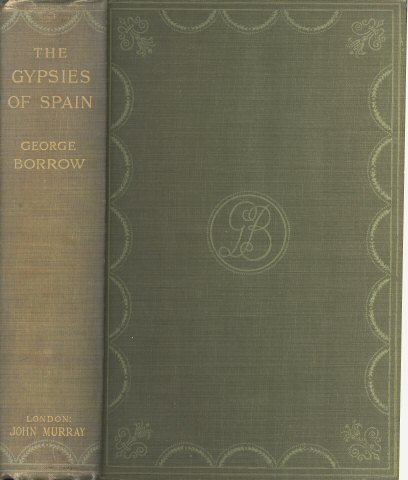 Transcribed from the 1901 John Murray edition by David Price,email [email protected] ZINCALI AN AC
...[Details]
Transcribed from the 1901 John Murray edition by David Price,email [email protected] ZINCALI AN AC
...[Details]
-
The Project Gutenberg eBook of The Contrast, by Royall Tyler
 Produced by Judith BossThe ContrastbyRoyall TylerA ComedyWITH AN INTRODUCTION BY THOMAS J. McKEEINTR
...[Details]
Produced by Judith BossThe ContrastbyRoyall TylerA ComedyWITH AN INTRODUCTION BY THOMAS J. McKEEINTR
...[Details]
-
Pierre Grassou, by Honore de Balzac
 PIERRE GRASSOU By Honore De Balzac Translated by Katharine Prescott Wormeley Dedication To
...[Details]
PIERRE GRASSOU By Honore De Balzac Translated by Katharine Prescott Wormeley Dedication To
...[Details]
-
The Altar of the Dead, by Henry James
 Transcribed from the 1916 Martin Secker edition by DavidPrice, email [email protected] ALTAR OFTHE
...[Details]
Transcribed from the 1916 Martin Secker edition by DavidPrice, email [email protected] ALTAR OFTHE
...[Details]
- The Autobiography of a Slander
- 'The Altruist in Politics' by Benjamin Cardozo
- Mugby Junction
- The Perils of Certain English Prisoners
- The Kingdom of the Blind, by E. Phillips Oppenheim
- The Project Gutenberg eBook of Cyrano de Bergerac, by Edmond Rostand
- The Soul of the Far East, by Percival Lowell
- The Project Gutenberg eBook of A Guide to the Best Historical Novels and Tales, by Jonathan Nield
- Lady Baltimore, by Owen Wister
- The Scapegoat, by Hall Caine
The Project Gutenberg eBook of The Legends of the Jews, Volume 1, by Louis Ginzberg

The Project Gutenberg eBook of La Duchesse De Palliano, by Stendhal

- Swan Song, by Anton Checkov
- Areopagitica, by Milton
- The Moravians in Georgia, by Adelaide L. Fries
- Grace Abounding to the Chief of Sinners, by John Bunyan
- The Breaking Point, by Mary Roberts Rinehart
- The Project Gutenberg eBook of Idylls of the King, by Alfred, Lord Tennyson
- The Project Gutenberg eBook of Latin Vulgate, Esther: Liber Esther, by Anonymous